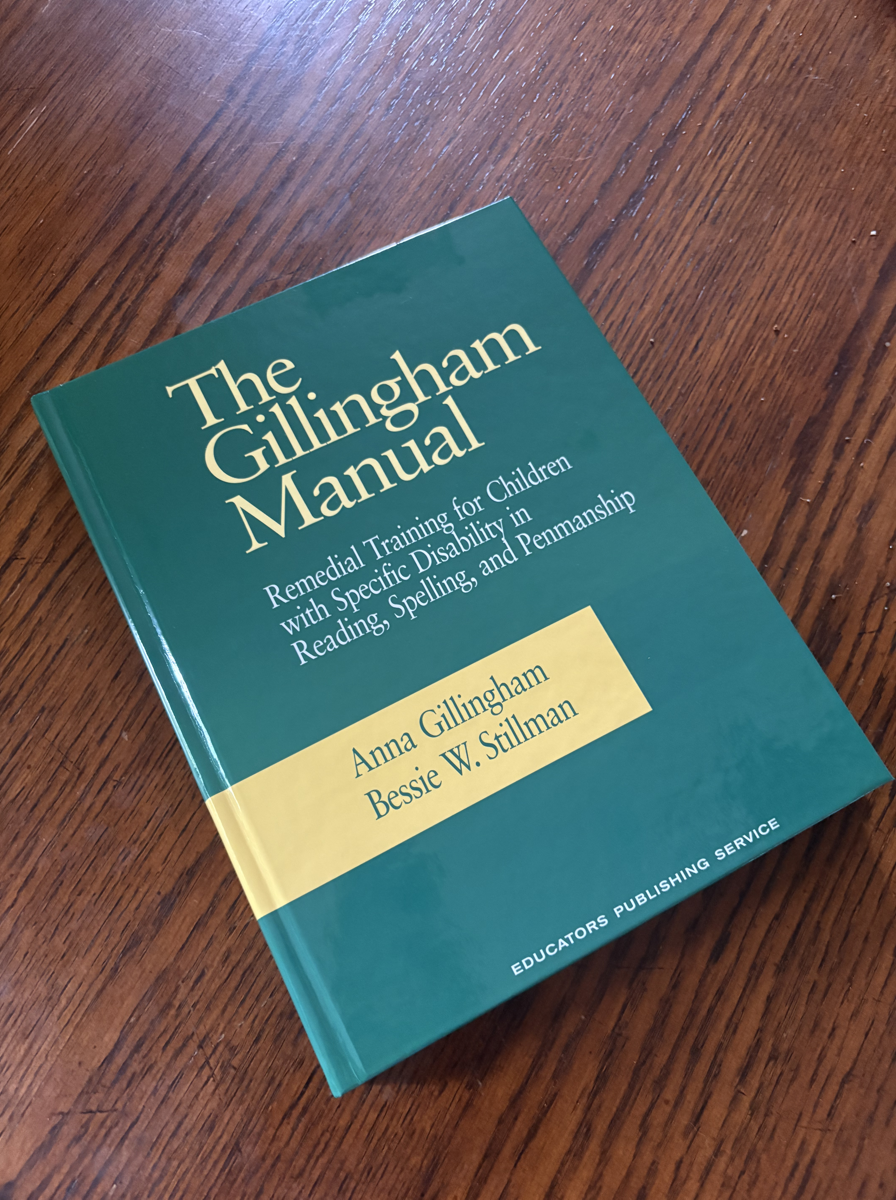
We are a center dedicated to the Orton‑Gillingham Approach, as developed by Dr. Samuel Orton and Anna Gillingham in the early 1930s.
Empower Learning, Elevate Futures
We provide expert tutoring and training within the guidelines of the Orton-Gillingham Academy (OGA), providing the highest standard of dyslexia remediation. The Orton-Gillingham Approach is the gold standard for dyslexia tutoring, supported by over 80 years of convergent research confirming the approach.
We serve the Portland-Vancouver metropolitan area. As a center promoting the Orton-Gillingham Academy, we can also refer you to OGA trained tutors throughout the states of Oregon and Washington.
We offer academic testing services in the Portland-Vancouver area, with need-based financial support.
Our center only employs tutors with training from the Orton-Gillingham Academy.

Our Services
Orton-Gillingham tutoring is an approach, not a program. It is diagnostic and prescriptive, meaning that each lesson is individually tailored to your child’s current needs and level, and proceeds as the child masters previous concepts. This distinction is what sets us apart from other dyslexia tutoring techniques.
Orton-Gillingham Tutoring
We have close relationships with several Orton-Gillingham Fellows who can provide training in the Orton-Gillingham Approach.
We can register you with one of our Fellows, on several different training schedules.
Tutor Training
We provide starndardized academic testing as a baseline for determining if dyslexia tutoring is appropriate for you/your child. If neuropsychological testing is indicated, we will refer you to our partner organization, Webb Psychological Services. We may be able to provide financial assistance for this testing.
Dyslexia Testing
As a nonprofit, we don’t participate in lobbying efforts, but we do have the ability to reach out and educate legislators about the urgent crisis in reading in the state of Oregon, as demonstated by our ranking as 50th out of 50 states in 4th grade readling scores.
Advocacy
OGA Definition of Dyslexia
This definition describes dyslexia as it appears in children and adults reading in English.
Dyslexia interferes with the development of reading and writing, which are the cornerstones of school success, independent living, and lifelong learning. Dyslexia is linked to neurobiological differences that affect how students learn to read and spell words. These differences usually include a core weakness in phonological processing. The signs of dyslexia look different depending on the language and writing system.
Individuals with dyslexia struggle with one or more of the following skills: sounding out unfamiliar words (decoding), reading words instantly, and/or spelling (encoding). The quality of reading instruction, family genetics, and other factors can influence the development of reading and writing skills for individuals with dyslexia. The challenges posed by dyslexia range from mild to severe.
Consequences of dyslexia include labored reading, poor reading comprehension, and/or poor written expression. Individuals with dyslexia may read less accurately and more slowly than other students their age. The effort required to recognize words may interfere with understanding the text. Expressing thoughts in writing is typically very difficult as well. These challenges may lead to difficulty with school assignments, avoidance of reading for pleasure, reduced experiences with text, and fewer opportunities to learn. Without proper remediation, these consequences can impede growth in language development, thinking skills, and knowledge. In turn, these problems can interfere with school success, self-esteem, peer relationships, and professional achievement.
Dyslexia can present a significant barrier to learning. Dyslexia is not a result of low intelligence. Dyslexia can affect individuals of any ability, ranging from those who are academically gifted to those who have cognitive impairments. It can affect multilingual learners and students who speak any dialect. Dyslexia can occur along with other learning disorders. These include, but are not limited to, speech and language disorders, attention deficit-hyperactivity disorder, and autism spectrum disorder.
For some individuals with dyslexia, learning difficulties appear early in school, when they begin working with the alphabet. Students may experience unusual difficulty learning their letter names, learning phonics, sounding out words, and spelling words. Other individuals with dyslexia appear to read adequately in the early grades, but struggle to read longer, unfamiliar words confidently. These individuals may be identified with dyslexia later in elementary, middle, or high school.
Individuals with dyslexia will not become strong readers without accurate identification and specialized instruction to improve their reading and writing skills. They can benefit from intensive instruction at any age, from kindergarten through adulthood. Early intervention is most effective. Individuals with dyslexia may be identified as having a specific learning disability that requires specialized instruction. Dyslexia identification laws vary between states. Individuals with dyslexia may require accommodations in education, post-secondary training, and employment to demonstrate their full potential.
Parents can help their dyslexic child build confidence by noticing and developing their strengths. Professionals with dyslexia expertise can help parents understand their child’s learning profile of strengths and weaknesses to provide a foundation for setting instructional goals. Dyslexia can be highly treatable if it is properly identified, and if appropriate intervention is provided by a thoroughly trained instructor.
© 2026 by Academy of Orton-Gillingham Practitioners and Educators is licensed under CC BY-ND 4.0.
To view a copy of this license, visit https://creativecommons.org/licenses/by-nd/4.0/
Donate to the
Orton-Gillingham Dyslexia Center
Make a donation today to support our work. Your donation will be processed through Zeffy, a secure donation platform especially for non-profits.
Click this link to be taken to our donation page,
or scan the QR code below:

We are a registered 501(c)(3) nonprofit, and all donations are deductible to the fullest extent allowed by IRS regulations.
EIN: 42-2695845